Evidence-driven software release governance

Know whether software is ready to ship. And prove why.

EvidenceGraph connects requirements, code, builds, vulnerabilities, approvals and regulatory controls into one defensible executive release decision.
One release truthNamed accountabilityAudit-ready evidence
EvidenceGraph automotive software delivery readiness cockpit
100%control mapping coverage
Conditional GoNamed owners. Due dates. Accepted residual risk.
6connected evidence domains
3clear release outcomes
100%traceable decision evidence
1executive release truth
The board-level problem

Software delivery risk is visible everywhere, but owned nowhere.

Requirements sit in DOORS. Delivery work lives in Jira and GitHub. Builds run in Jenkins. Vulnerabilities come from Qualys and Black Duck. Approvals are often fragmented across tickets, spreadsheets and email. EvidenceGraph correlates these signals before management accepts the release.

01 / FRAGMENTATION

No shared release truth

Engineering, product, cybersecurity and management operate from different datasets and different definitions of ready.

02 / ACCOUNTABILITY

Risk without a named owner

Exceptions are accepted informally, while ownership, approval timestamps, mitigation dates and residual risk remain unclear.

03 / AUDITABILITY

Evidence assembled too late

Teams reconstruct the decision after the fact instead of producing decision-grade evidence at the moment of release.

Interactive release model

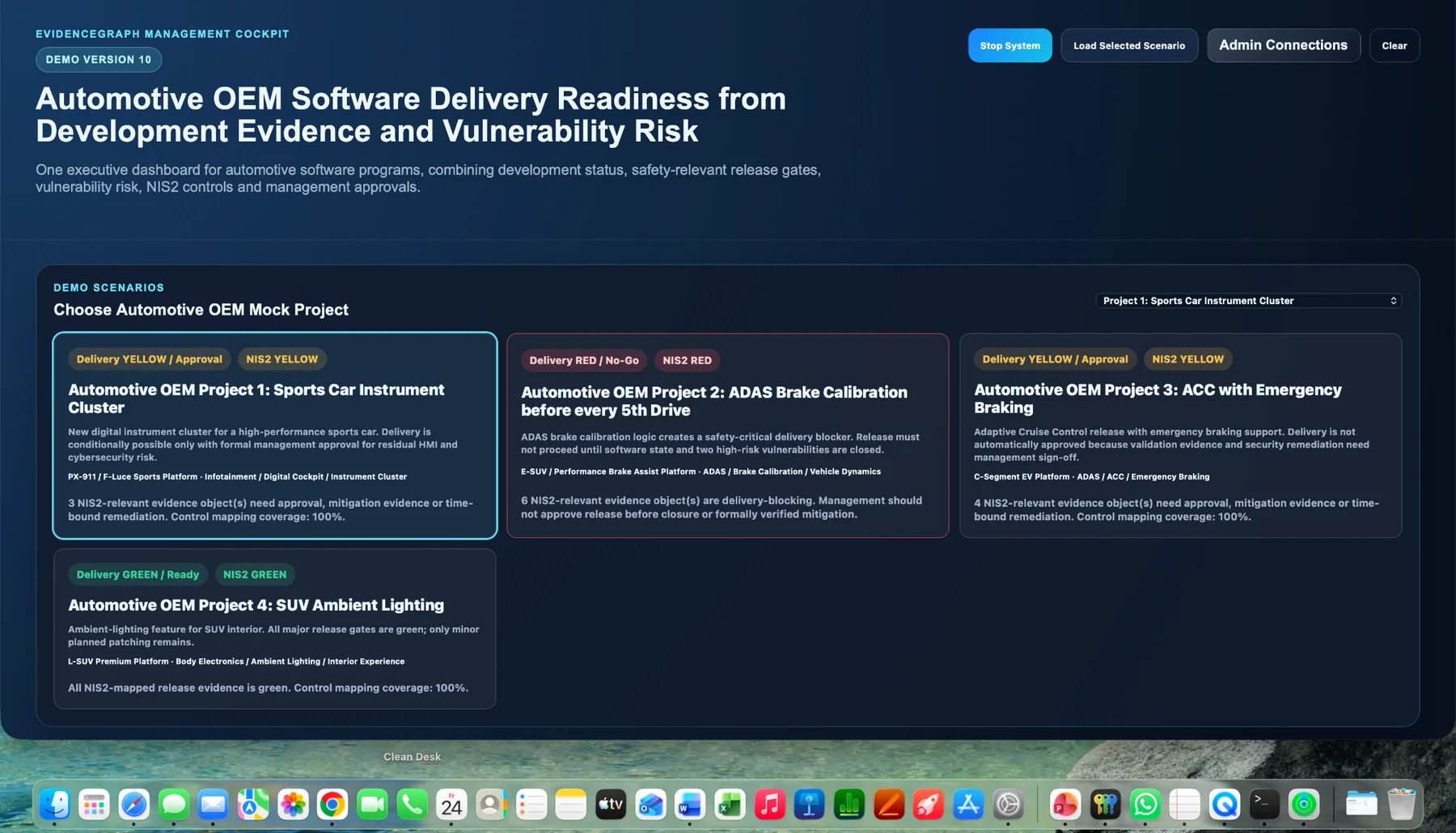
Four projects. Four different risk profiles. One consistent decision logic.

The web demo models realistic automotive software programs and converts their engineering and security evidence into a management recommendation.

Automotive OEM Project 1

Sports Car Instrument Cluster

A new digital instrument cluster for a high-performance sports car. Delivery is conditionally possible with formal approval for residual HMI and cybersecurity risk.
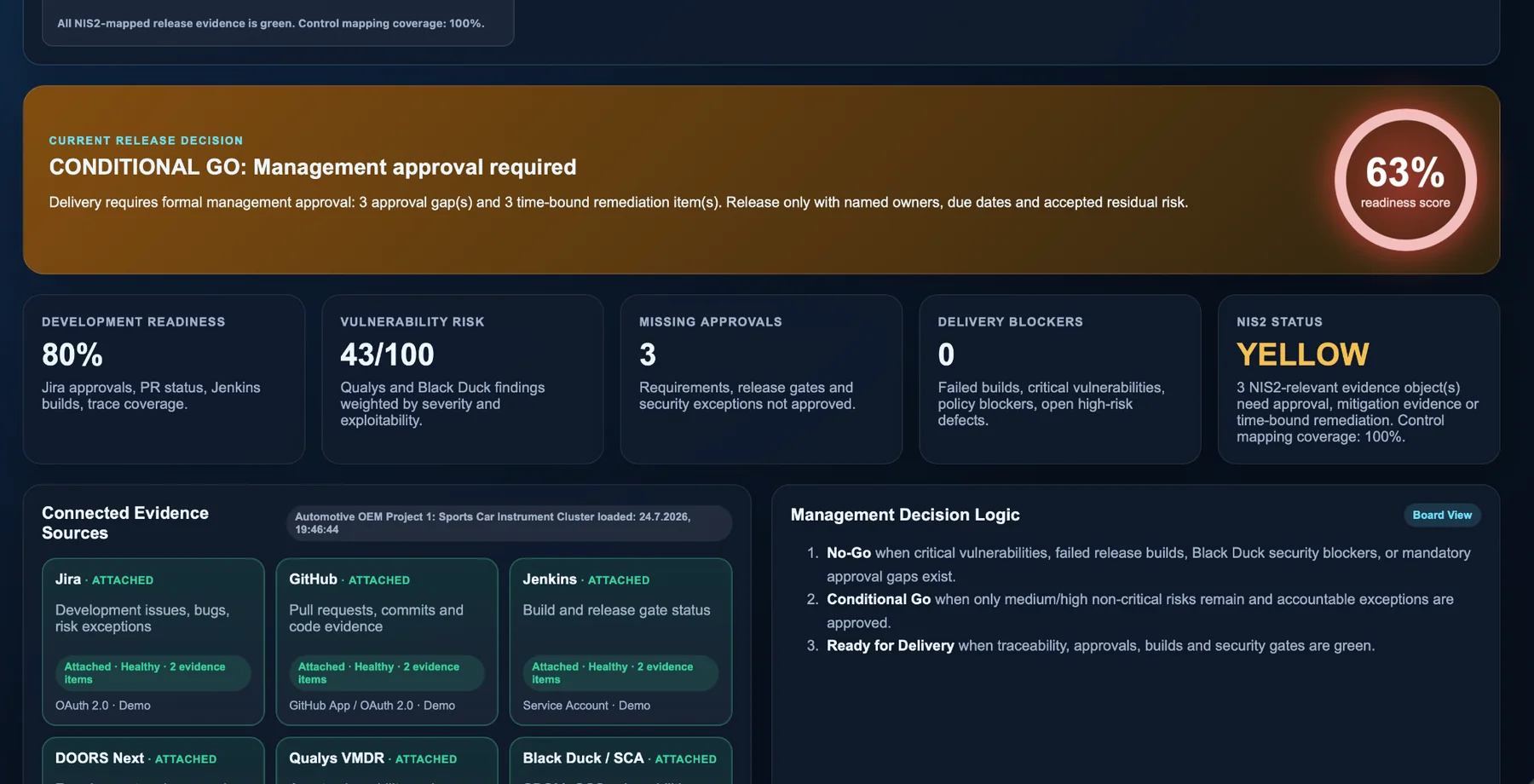
CONDITIONAL GO: Management approval required
63%readiness
Development readiness80%
Vulnerability risk43/100
Missing approvals3
Delivery blockers0
NIS2 statusYELLOW
Release only with named owners, due dates and accepted residual risk.
EvidenceGraph conditional go release decision and readiness score
One cockpit. One decision.
Development readiness, vulnerability risk, approvals, blockers and NIS2 evidence in a common governance model.
Get the walkthrough
No-GoCritical vulnerability, failed build, mandatory approval gap or policy blocker
Conditional GoNon-critical risk with formal exception, owner and due date
ReadyTraceability, approvals, builds and security gates are green
Decision EvidenceA defensible management record is created at release time
How EvidenceGraph works

From tool data to decision evidence.

EvidenceGraph does not replace engineering systems. It connects their evidence, evaluates release criteria and exposes what management must approve.

  • Connect Jira, GitHub, Jenkins, DOORS Next, Qualys VMDR, Black Duck SCA and additional engineering systems.
  • Normalize requirements, PRs, builds, vulnerabilities, approvals, owners, due dates and regulatory controls.
  • Distinguish hard delivery blockers from manageable, time-bound exceptions.
  • Create a release readiness report and individual evidence documents for every decision object.
1

Connect

Use evidence from the systems teams already trust.

2

Correlate

Link requirements, code, builds, vulnerabilities, approvals and NIS2 controls.

3

Decide

Deliver a transparent release recommendation and a defensible management record.

Connected evidence architecture

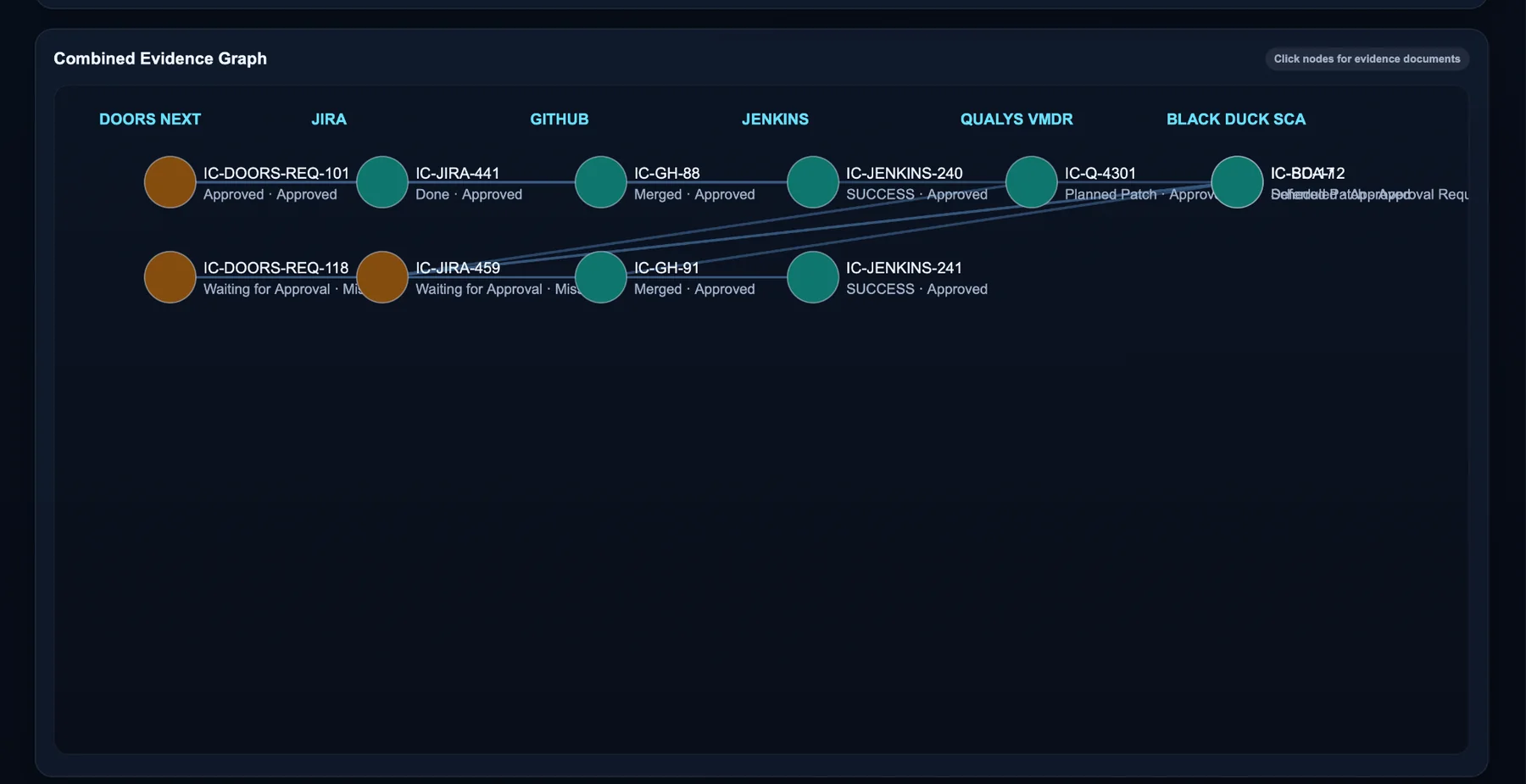
Evidence flows from source systems into one governed object model.

RequirementsDOORS NextRequirement, owner, approval, trace links
DeliveryJiraIssues, risks, exceptions, accountable tasks
CodeGitHubCommits, pull requests, merge state, reviewers
BuildJenkinsBuild status, release gates, failed pipelines
ExposureQualys VMDRAssets, severity, CVSS, exploitability, SLA
Software Supply ChainBlack Duck SCAComponents, SBOM, vulnerabilities, licence policy
Source evidenceLinked evidence objectsRelease gate logicExecutive decision record
Built for high-consequence delivery

Where a missed signal becomes a commercial, safety or regulatory event.

Automotive software

Vehicle platforms, ADAS, cockpit, infotainment, body electronics and software-defined vehicle programs.

  • Release readiness by vehicle program
  • Cross-domain dependency evidence
  • Supplier and OEM accountability

Industrial and critical systems

Connected products, industrial automation, energy systems and regulated digital infrastructure.

  • Operational and cyber risk correlation
  • Formal exception workflows
  • Decision evidence for critical releases

Cybersecurity governance

NIS2-oriented evidence, vulnerability remediation, exception approval and executive accountability.

  • Control mapping and coverage
  • Named owners and remediation dates
  • Audit-ready approval history
Inside the evidence layer

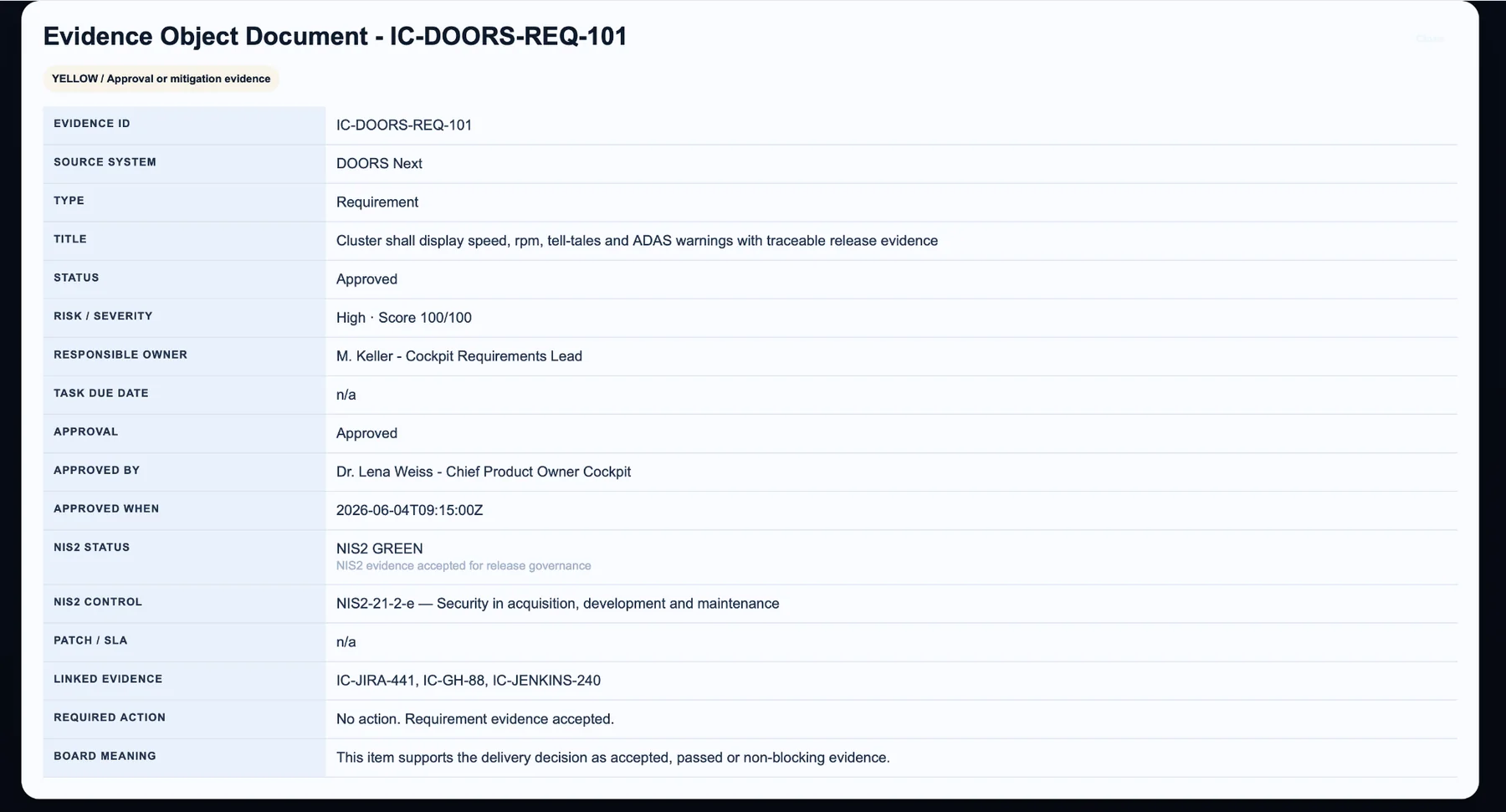
Every status opens into the evidence behind it.

No black-box score. Users can inspect the release gate, trace linked objects and open the decision evidence document behind every green, yellow or red signal.
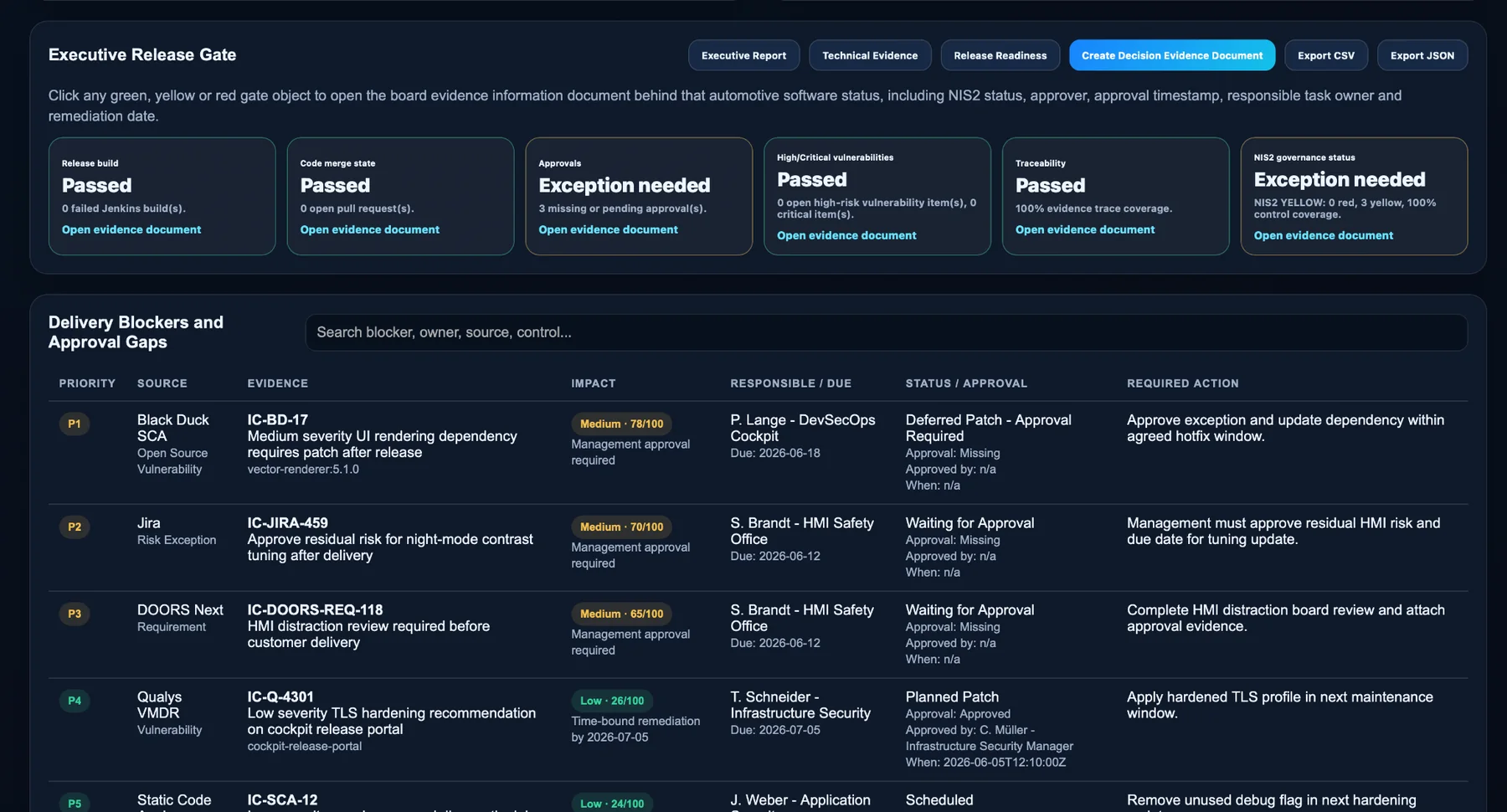
Business outcome

EvidenceGraph changes the release conversation.

Before

“We believe the release is ready.”

Evidence is fragmented, decisions are subjective and accountability is difficult to reconstruct.

See the decision before the risk

Make software release readiness explainable.

Book a focused executive demo using an automotive OEM scenario or your own delivery governance challenge.

Request a demo →